

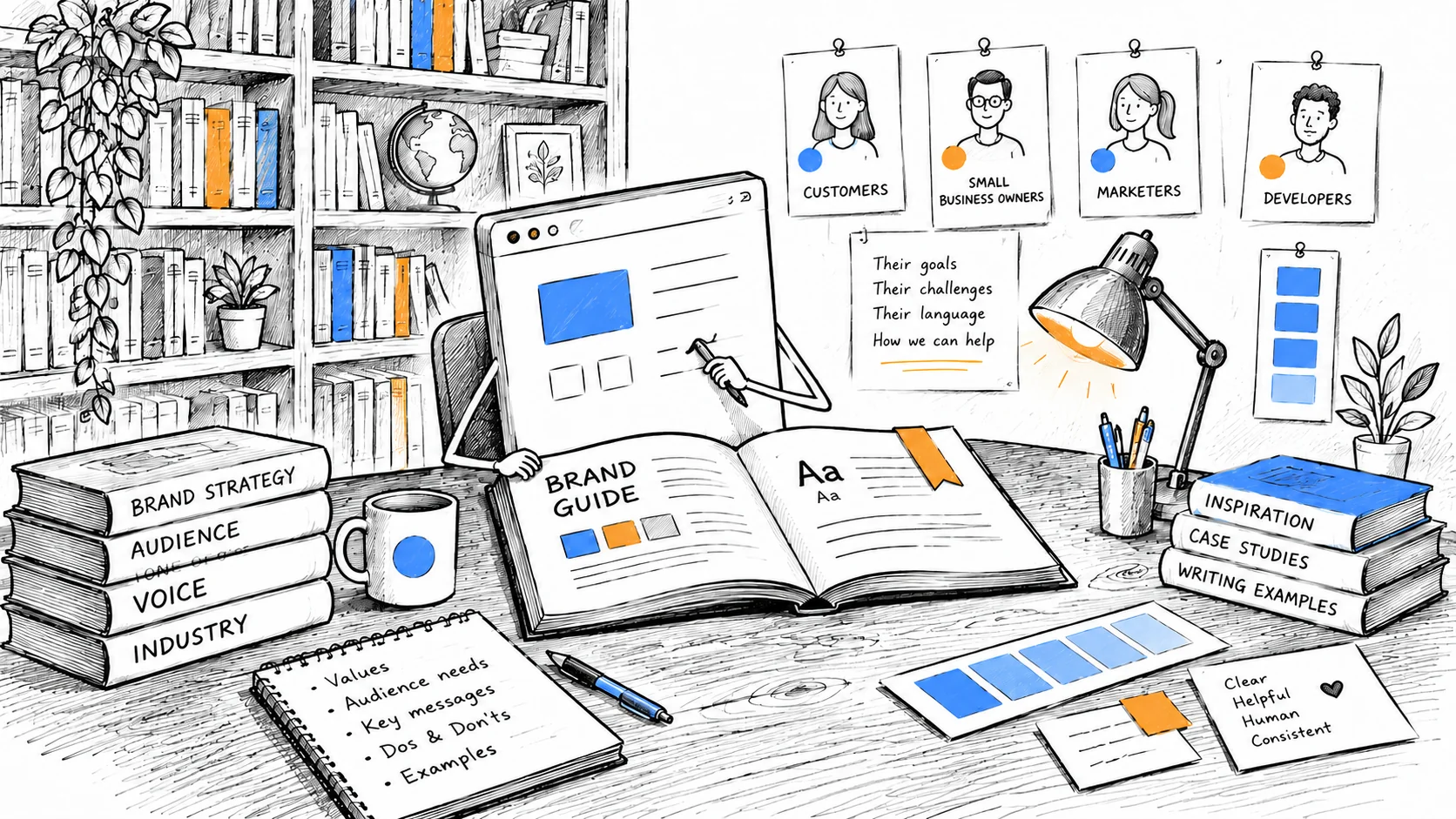
Your marketing agents need the same brief
The draft reads well. The product name is wrong, the offer expired last month, and the closing paragraph promises a service you don’t provide.
Most marketing teams would call that a briefing problem if a freelancer delivered it. With AI, we tend to call it a prompting problem and start rewriting the instructions. Sometimes that helps. Sometimes we’re asking the model to compensate for a business that hasn’t agreed on its own source material.
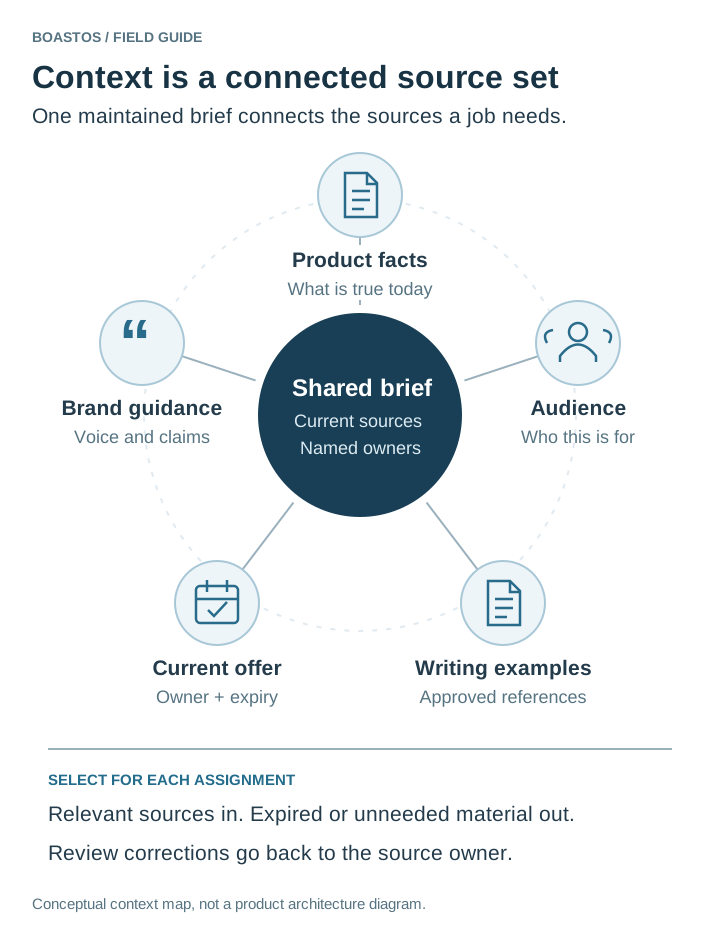
An agent doing marketing work needs more than a tone of voice. It needs to know what is true today.
A shared brief needs an owner
In its September 2025 article on context engineering, Anthropic describes the work of selecting and maintaining the information available to an agent. The practical marketing implication is straightforward: what the agent can retrieve deserves as much attention as the instruction you type.
Start with the material a new person would need to work competently. What do you sell? Who buys it? What problems do customers bring to you? Which claims can you support? Which examples sound like you? Where can someone verify the current price?
Then assign ownership. A pricing document without an owner will eventually disagree with the website. A brand guide that nobody updates becomes a record of what the company used to sound like. Connecting those documents to AI makes the contradictions easier to distribute.
Give context an expiration habit
A service business might have an offer that ends on July 31. Put the end date alongside the offer, not in a separate email that the agent will never see. If an agent drafts an August promotion, it should be able to see that the offer is no longer available.
The same principle applies to customer stories, partner names, and product capabilities. Keep the source and review date close to the claim. Decide what the agent should do when two sources disagree. “Ask the owner” is a perfectly useful behavior when the alternative is publishing the wrong price.
This doesn’t require a giant knowledge project before you begin. For one workflow, a small set of current, approved documents may be enough. Expand it when the work calls for more.
Keep a small context register
A shared folder is easier to maintain when each important document carries a few useful fields. Here is an illustrative register for a newsletter workflow:
| Material | Owner | Review trigger | If it is stale or missing |
|---|---|---|---|
| Current offer | Campaign owner | Offer changes or expires | Omit the offer and ask for an approved replacement |
| Product facts | Product owner | A capability or price changes | Flag the disputed claim for review |
| Audience brief | Marketing lead | The campaign targets a new audience | Confirm the audience before drafting |
| Writing examples | Editor | Reviewers repeatedly make the same correction | Update the example and explain the change |
Keep a link to the approved source with each record. Access should also match the assignment: customer information that an agent does not need should stay out of its context.
Don’t give every agent every document
A newsletter agent needs approved messaging, the audience brief, and the current offer. It probably doesn’t need every sales call transcript or an entire archive of abandoned positioning ideas.
That distinction also helps the person reviewing the work. When a draft makes a claim, ask the agent to point to the source it used. The reviewer can check the claim directly instead of guessing where it came from. If the source is stale, fix the source as well as the draft.
Over time, those corrections become a practical maintenance routine. You stop fixing the same misunderstanding in five separate conversations.
Look for fewer repeated corrections
The payoff isn’t that every sentence sounds identical. Different channels need different writing. The payoff is that the facts, promises, and business priorities stay consistent even when different agents do the work.
Watch the edits your team makes. If reviewers keep replacing the same phrase, correcting the same audience assumption, or removing the same unsupported claim, the shared brief needs attention. A better prompt in one chat only fixes one chat.
For us, that is the reason to put business context inside the marketing operation. The next agent should benefit from what the last review taught you.
Organizing that context is part of BoastAble implementation services. You can also start with the software and training; the pricing comparison explains both options.
Prepared with AI assistance for BoastOS. Examples are illustrative unless identified as measured results. Product references describe BoastOS, which the author helps build.